
Slip rings are small but mighty devices that serve multiple purposes and can be used in various industries. They come in different types, shapes, and sizes and are installed where the stationary part of a machine meets a rotational part. Basic designs include rings that rotate with the rotating part of the machine and static brushes that slide along the ring during rotation. The assembly keeps the equipment intact while enabling smooth operation and power or signal transmission. With many purposes and uses, slip rings are now in almost any device with stationary and rotary components.
How slip rings work in hydraulic systems
In hydraulic systems, slip rings help transmit fluid in the most demanding applications where continuous rotation is required. They connect fixed and rotary hydraulic pipelines and provide 360° motion without interference. Hydraulic slip rings, also known as hydraulic swivels or rotary joints, typically include a housing, shaft, bearings, rings, and seals. This self-contained assembly prevents leakage, error, and damage to the stationary and rotating parts.

Hydraulic slip rings have a two-in-one purpose. Besides providing a smooth flow of fluid — such as coolant, gas, water, or steam — they can also transmit signals and combine multiple wires in a single assembly without damaging the wiring. They can also enhance functionality by providing adequate pressure between components. Some variations include sensors to measure operational parameters, such as speed and temperature, and provide feedback on the slip ring’s condition.
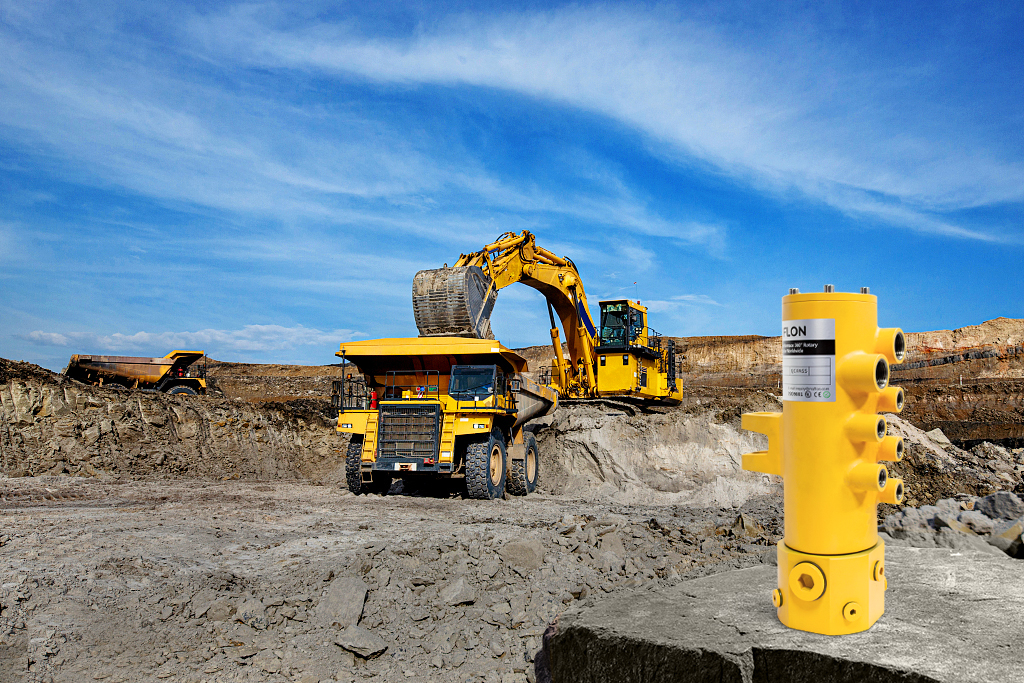
Most hydraulic slip rings are automatic and well-adjusted to hydraulic systems’ working temperatures, pressures, and other factors. They can also be remotely controlled and installed in different machine parts. Mobile equipment like excavators, bulldozers, and dump trucks are some of the most common hydraulic machines that rely on slip rings. Such machines must rotate a cab and hydraulic components 360° in either direction without losing pressure or power. Hydraulic slip rings are also used in robotics, packaging, wind turbines, medical equipment, oil and gas equipment, metal construction, plastic molding, and aerospace — any application that requires continuous rotation.
Types of hydraulic slip rings
There are three main hydraulic slip ring types: integrated, semi-integrated, and separate. Integrated slip rings reside in the steel construction of hydraulic machinery, which provides a rugged structure for better durability and performance. Semi-integrated designs lack a mounting tube and offer better access for maintenance. Separate hydraulic slip rings can be assembled and installed with conventional slip rings and consist of a variable mounting tube.
Most slip rings on the market transmit liquid, gas, power, or signal. Companies like Moflon also provide options for fiber optic and high-frequency transmissions and offer different sealing and shaft types to accommodate a variety of operating conditions. Variations for high speed, low torque, high pressure, high flow volume, and other parameters can be tailored for specific application requirements.

Slip rings can help overcome mechanical issues, provide better performance between machine parts, and simplify system operation. In hydraulics systems, they afford smooth operation under heavy loads and high capacity in overload conditions. They can even help adjust the speed of rotation via the resistance. Since slip rings are well-tested and proven solutions, they can fit many different purposes, needs, and industries.
Moflon
moflon.com