

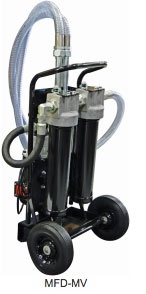
 Filtration systems are used anywhere upgraded or auxiliary filtration is required in a hydraulic system. A filtration system is available in either permanent kidney loop circuits or portable filter cart assemblies. Either system is used to improve the cleanliness of the hydraulic fluid in a hydraulic machine. Often, filtration systems are used to augment existing filtration, such as the return line filter.
The kidney loop filtration systems, also known as off-line filtration, is a pump/motor group circulating fluid out from the hydraulic reservoir, through a filter, and then back into the tank. The filter in these systems are often very low micron and very high efficiency. The steady flow of fluid from a dedicated pump prevents issues related to high efficiency filters in the pressure or return lines of the circuit, such as backpressure or pressure spikes. Often times, a kidney loop system will include an oil-cooler, providing complete fluid conditioning for the machine.
Filtration systems can also be portable, and no hydraulic shop is complete without a filter cart. A filter cart is a dedicated pump/motor group, just as with a kidney loop system, but is mounted to what is essentially a hand cart. Built onto the cart is one or more hydraulic filters, with lengths of suction and discharge hose. The cart can be wheeled to the hydraulic machine requiring servicing, where the suction pipe is inserted into the filler port of the reservoir. The discharge port is placed onto or into a return port on the tank, the cart powered on, and then fluid filters as it circulates.
The advantage of a filter cart is that it can improve the fluid cleanliness on a machine after only a couple days of operation. Using a low micron filter with high efficiency and dirt holding capacity will allow you to use one cart for all of your plant’s machines, avoiding expensive kidney loop systems on every system. Also, hydraulic fluid should only be added to a reservoir via a filter cart. Fresh hydraulic fluid from a drum or bucket is not clean by fluid power standards. To prevent adding contamination from enter the system you’re trying to protect, all oil should be filtered as it enters the tank.